Author name: fstindia

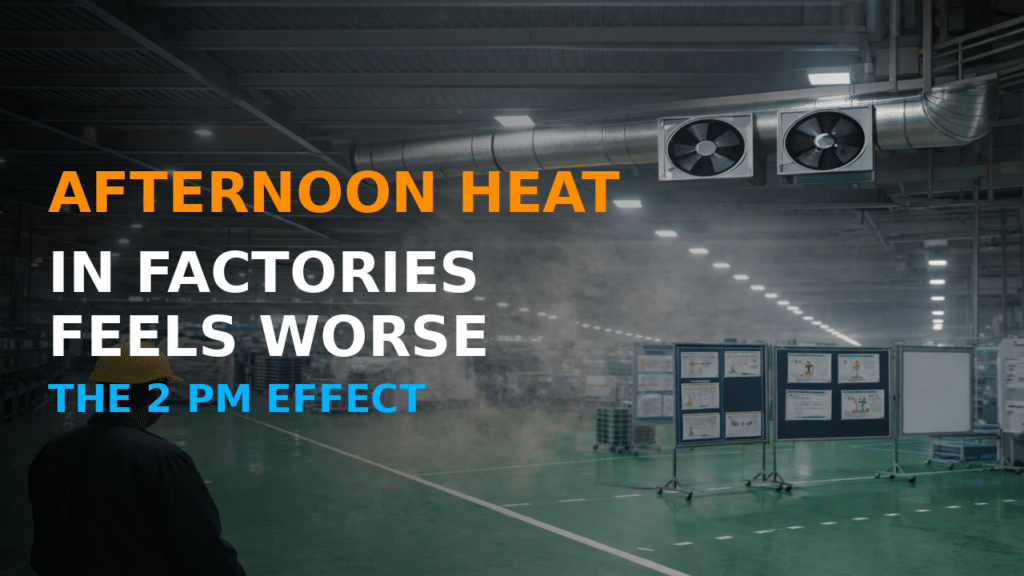
Afternoon heat in factories showing thermal accumulation, ventilation system, and heat buildup inside industrial shop floor

Why Afternoon Heat Feels Worse in Factories: Understanding Thermal Accumulation

1. Introduction Afternoon heat discomfort on shop floors is one of the most frequently reported operational issues. Workers feel significantly more fatigued post-lunch Perceived temperature rises disproportionately Output consistency drops in later hours of the shift What makes this problem technically interesting is that: In many cases, the measured temperature increase from morning to afternoon […]

Why Afternoon Heat Feels Worse in Factories: Understanding Thermal Accumulation Read More »
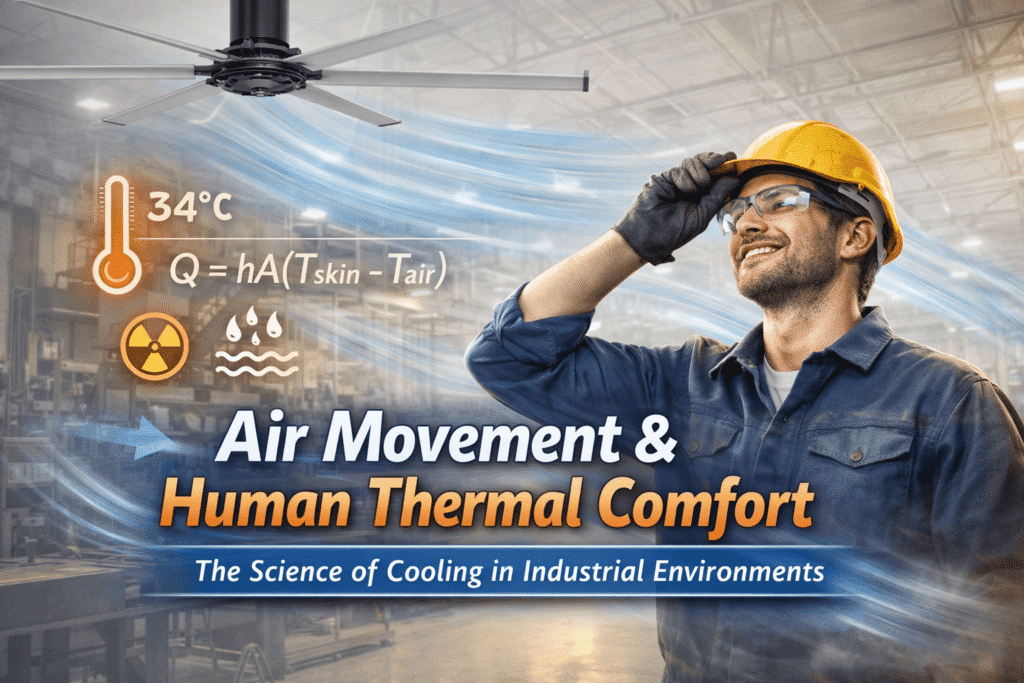
"Industrial worker experiencing improved thermal comfort under HVLS fan with airflow in factory environment

The Engineering Science Behind Air Movement and Human Thermal Comfort

On many industrial shop floors, workers often notice something interesting— when air starts moving across the workspace, the environment instantly feels cooler, even though the temperature hasn’t changed. This is commonly observed in factories using air circulators or HVLS fans. The thermometer may still read 34°C, but workers feel significantly more comfortable. This is not

The Engineering Science Behind Air Movement and Human Thermal Comfort Read More »

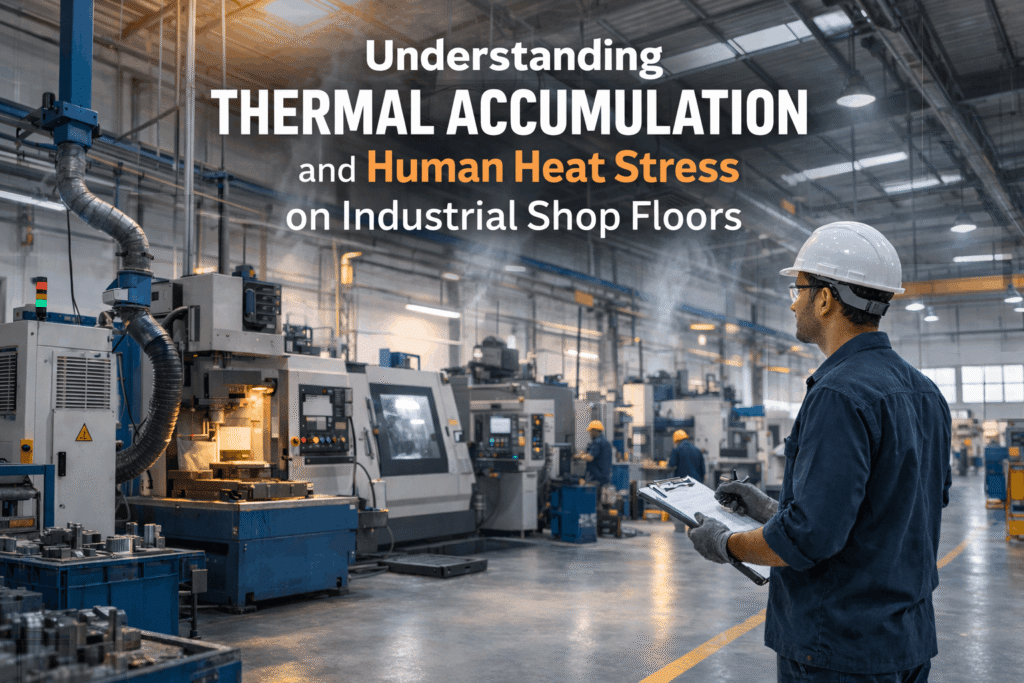
Understanding Thermal Accumulation and Human Heat Stress on Industrial Shop Floors

Many factories report a recurring pattern. In the morning, the shop floor feels reasonably comfortable.  Machines start operating, workers settle into production, and the environment appears manageable. But by mid-afternoon, something changes. Operators begin to complain about the heat. Fatigue increases. The air feels heavier and more stagnant. Productivity often slows during the latter half

Understanding Thermal Accumulation and Human Heat Stress on Industrial Shop Floors Read More »

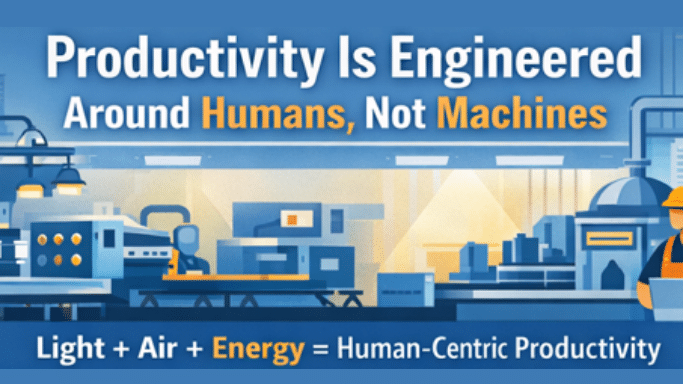
Shop floor showing light air energy integration improving worker productivity and reducing fatigue

Productivity is not a function of machines alone.It is a function of how Light, Air, and Energy are engineered around humans

Walk into any modern factory and you will see impressive machines—CNCs, robots, conveyors, furnaces—each optimised for speed, accuracy, and uptime. Yet, despite world-class machinery, many shop floors quietly struggle with: Fatigued operators by mid-shift Inconsistent output quality High error rates in the last hours of the day Rising energy bills with no visible productivity gain

Productivity is not a function of machines alone.It is a function of how Light, Air, and Energy are engineered around humans Read More »

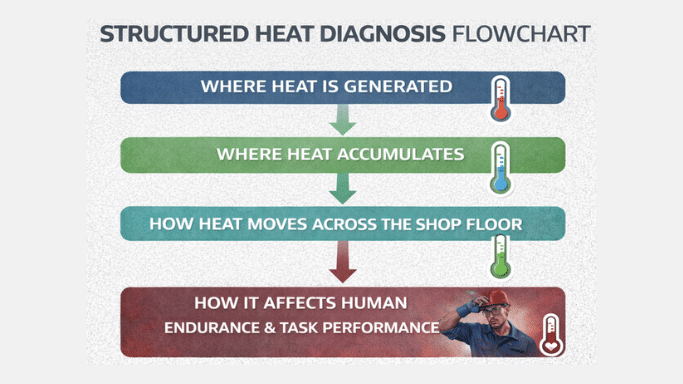
A Structured Heat Diagnosis Framework for Industrial Shop Floors

Heat issues on industrial shop floors are rarely ignored. What is far more common, however, is acting too quickly. Additional cooling capacity is installed.More fans are deployed. Ventilation systems are modified. Yet despite repeated interventions, many factories continue to struggle with uneven temperatures, rising energy costs, and declining human endurance. This is not a failure

A Structured Heat Diagnosis Framework for Industrial Shop Floors Read More »

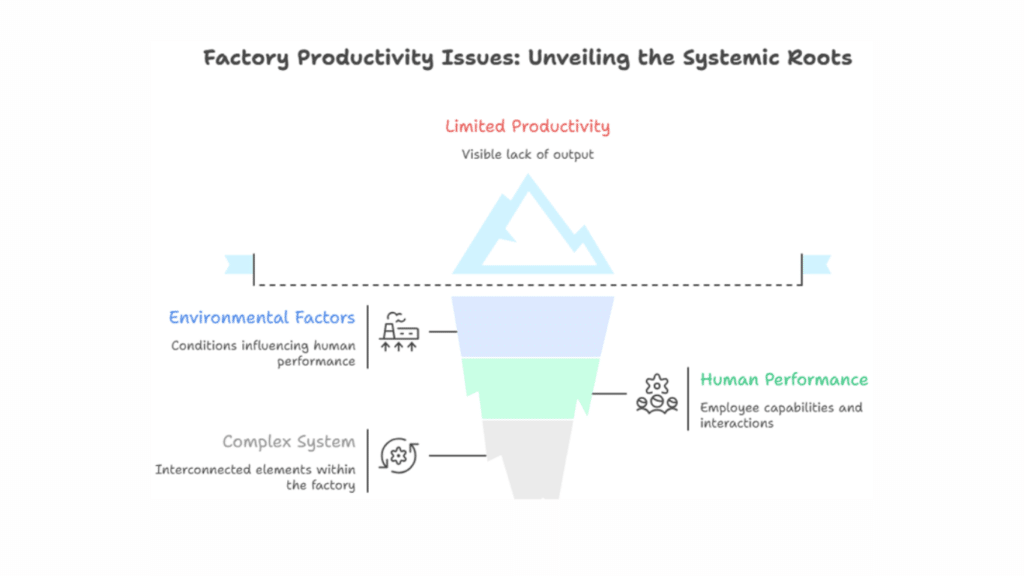
factory productivity system-level issues

Differentiate: Why Factory Productivity Problems Are System level — Not component level

Factory productivity problems are often misdiagnosed. When output drops on a shop floor, the first instinct is to blame machines, capacity, or technology. Equipment upgrades seem like the fastest solution. Yet many factories find that even after installing new machines, productivity barely improves. This is because most factory productivity problems are not component-level issues —

Differentiate: Why Factory Productivity Problems Are System level — Not component level Read More »

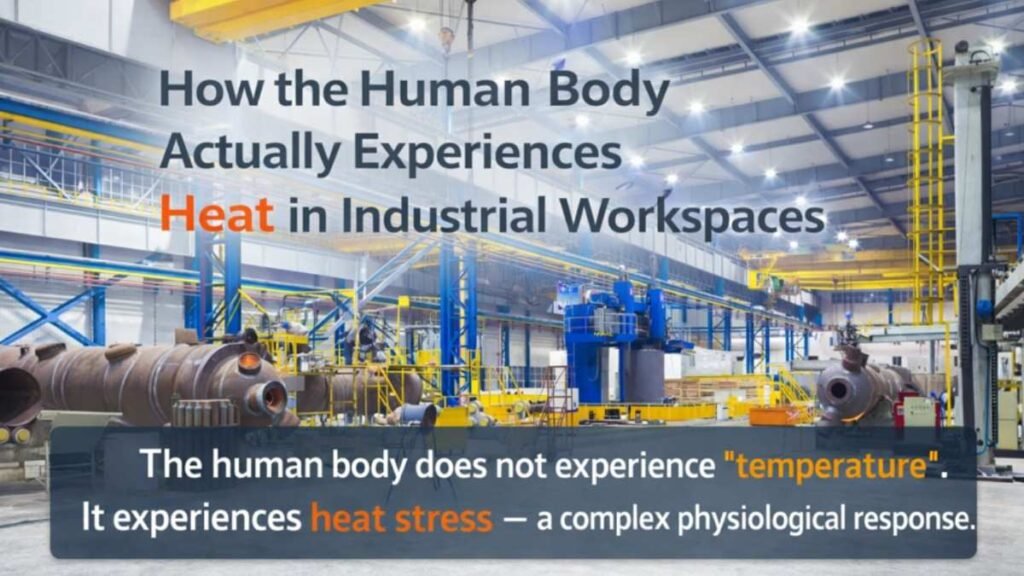
heat stress in industrial Workspaces

How the Human Body Actually Experiences Heat in Industrial Workspaces

In industrial environments, heat discomfort is usually discussed in terms of air temperature. If workers feel uncomfortable, the first response is often to check the thermometer, add fans, or increase cooling capacity. How the human body experiences heat in industrial workspaces depends on a balance of radiation, airflow, humidity, and internal heat generation — not

How the Human Body Actually Experiences Heat in Industrial Workspaces Read More »

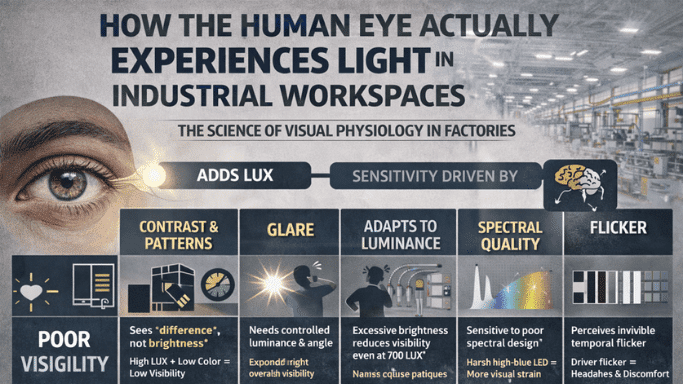
industrial lighting and human eye perception

How the Human Eye Actually Experiences Light in Industrial Workspaces

Industrial lighting and the human eye are often misunderstood in factory lighting design.Most industrial environments still rely on a single metric—lux levels—to define lighting quality. When visibility complaints arise, the default response is to add more fixtures, increase wattage, and raise lux values. Yet factories operating at 500–700 lux still report: Eye strain Visual fatigue

How the Human Eye Actually Experiences Light in Industrial Workspaces Read More »

Industrial lighting on a factory shop floor showing high lux levels but uneven visibility due to glare and uniform illumination challenges

Lighting Is Not Brightness: Why More Lux Does Not Guarantee Better Visibility on Shop Floors

Introduction In industrial environments, lighting decisions are often reduced to one metric: lux levels. If an area feels poorly lit, the solution seems obvious—add fixtures or increase brightness. Yet many factories operate at high lux levels and still struggle with: Visual fatigue Inspection errors Reduced concentration Higher energy costs The root cause is a misunderstanding:

Lighting Is Not Brightness: Why More Lux Does Not Guarantee Better Visibility on Shop Floors Read More »

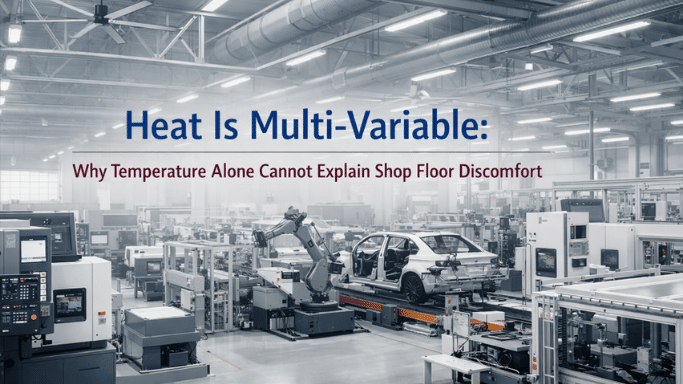
industrial shop floor heat discomfort caused by multiple thermal factors

Heat Is Multi-Variable: Why Temperature Alone Cannot Explain Shop Floor Discomfort

Introduction In industrial environments, shop floor heat discomfort is almost always blamed on high air temperature. As a result, corrective actions typically focus on increasing cooling capacity—adding air coolers, running industrial fans for longer durations, or lowering thermostat setpoints. However, many factories experience a persistent paradox: energy consumption increases, yet worker comfort does not improve.

Heat Is Multi-Variable: Why Temperature Alone Cannot Explain Shop Floor Discomfort Read More »

Inquire More
close slider

Inquire More

Your Name(Required)
Company Name(Required)

Scroll to Top